
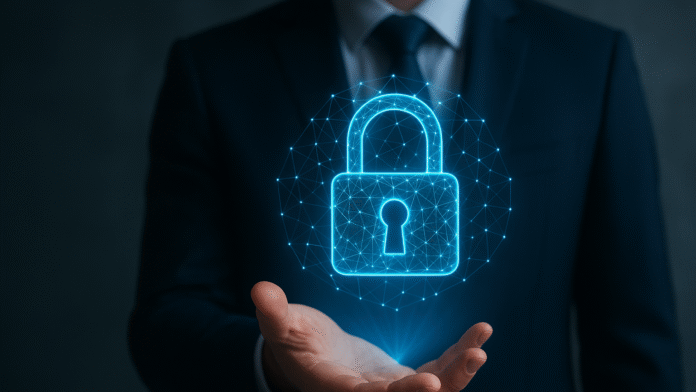

“The future of encryption and how quantum computing may redefine trust frameworks.”
Frontpage Journal | Tech Insights
As the digital economy expands at an unprecedented pace, the foundations of trust that underpin online interactions are facing a profound transformation. For decades, encryption has been the backbone of cybersecurity, ensuring that personal data, financial transactions, and sensitive communications remain secure. Yet the rise of quantum computing threatens to disrupt these established systems, challenging traditional assumptions about digital security. At the same time, quantum technology offers unprecedented opportunities to redefine trust frameworks, creating the potential for a new era of secure, reliable, and transparent digital interactions.
Encryption today relies heavily on complex mathematical problems that are difficult for classical computers to solve within a reasonable time frame. Public key cryptography, which forms the basis for secure communication over the internet, is built on principles such as factoring large prime numbers or computing discrete logarithms, tasks that classical computers find practically impossible to perform efficiently. These cryptographic systems have allowed businesses, governments, and individuals to exchange information with confidence, supporting digital banking, e-commerce, cloud computing, and countless other aspects of modern life.
Quantum computing, however, operates on fundamentally different principles. By exploiting the phenomena of superposition and entanglement, quantum machines can process enormous amounts of data simultaneously. This capability threatens to render many classical encryption methods obsolete. Algorithms that were once secure for decades could be broken within hours or minutes once large-scale quantum computers become operational. The implications are far-reaching: financial systems, health records, national security communications, and critical infrastructure could all be exposed if organizations fail to anticipate and adapt to this new reality.
The emergence of quantum threats has catalyzed research into quantum-resistant cryptography. These new encryption techniques are designed to withstand the computational power of quantum machines, ensuring that data remains secure even in a post-quantum world. Governments, multinational corporations, and academic institutions are investing heavily in developing, testing, and standardizing these methods. The National Institute of Standards and Technology (NIST) in the United States, for instance, has been leading efforts to identify and approve quantum-safe algorithms for widespread use. These initiatives signal a critical shift: cybersecurity is no longer solely a technical issue but a strategic concern that intersects with national security, corporate governance, and consumer confidence.
Quantum technology also introduces the possibility of entirely new approaches to securing information. Quantum key distribution (QKD), for example, leverages the principles of quantum mechanics to create unbreakable communication channels. In QKD, any attempt to intercept a key alters its state, immediately alerting parties to a breach. This offers a level of security and trust that classical encryption cannot match, transforming the way organizations manage sensitive information. Early experiments in quantum networks have already demonstrated secure communication over hundreds of kilometers, hinting at a future in which quantum-based trust systems become integral to digital infrastructure.
The implications of quantum security extend far beyond technical specifications. Businesses that adopt quantum-resilient strategies can gain a significant competitive advantage. Companies that proactively upgrade encryption protocols, invest in quantum-safe networks, and demonstrate their preparedness to clients and partners are better positioned to build trust in an era of heightened cybersecurity risk. Consumers, too, are becoming increasingly aware of the stakes. Confidence in online transactions, digital banking, and cloud services depends not only on the functionality of platforms but also on the perceived security of the underlying systems. Quantum-secure practices can therefore translate directly into customer loyalty, brand reputation, and market share.
The challenge, however, is not limited to technological readiness. Quantum security demands a rethinking of governance, policy, and international standards. Global coordination will be essential to ensure interoperability, compliance, and trust across borders. Financial transactions, healthcare records, and critical infrastructure increasingly traverse international networks. Without harmonized approaches to quantum security, inconsistencies in encryption standards or regulatory enforcement could create vulnerabilities that adversaries exploit. Governments, industry consortia, and standards organizations must work collaboratively to establish frameworks that are robust, transparent, and globally recognized.
In emerging markets, the race to quantum readiness presents both challenges and opportunities. Countries and businesses that invest early in quantum-resilient infrastructure can leapfrog traditional cybersecurity constraints, gaining trust and credibility in international trade, fintech, and digital governance. Conversely, lagging adoption could expose vulnerabilities, eroding consumer confidence and investor trust. Sri Lanka and other developing economies face the dual challenge of advancing digital transformation while preparing for the quantum future. Public-private partnerships, targeted investments in research, and capacity building in cybersecurity expertise will be essential to navigate this transition successfully.
Quantum computing also raises ethical and societal questions that intersect with trust. As systems capable of breaking traditional encryption become available, there is a heightened risk of misuse, whether through cybercrime, espionage, or industrial sabotage. Trust in digital systems is inseparable from public confidence that these technologies are governed responsibly. Organizations must therefore complement technical measures with policies, oversight, and transparency initiatives. Demonstrating accountability in quantum readiness is just as important as the underlying encryption itself. Stakeholders, from consumers to regulators, need assurance that data protection strategies are proactive, rigorous, and ethically sound.
The evolution of digital trust in the quantum era will likely redefine the relationship between technology and society. Trust is no longer a static expectation built on conventional encryption; it is an active, dynamic construct that must evolve alongside technological capabilities. Companies and governments that embrace this shift will treat quantum security not merely as a defensive measure but as a strategic asset. Integrating quantum-safe practices into broader digital governance frameworks enhances credibility, strengthens stakeholder relationships, and signals foresight in navigating complex technological landscapes.
Ultimately, the rise of quantum computing underscores a broader principle: trust is both fragile and foundational in the digital economy. The organizations that understand this, anticipate threats, and implement resilient systems will secure not only their data but their reputation and market position. Those that ignore it risk exposure not only to cyberattacks but to the erosion of stakeholder confidence. In the coming decade, quantum security will define the frontier of digital trust, determining who leads, who follows, and who falters in an increasingly interconnected world.
The promise of quantum technology is immense, offering solutions that could make digital communication, financial systems, and critical infrastructure fundamentally secure. But realizing this potential requires strategic foresight, ethical governance, and international collaboration. The next frontier of digital trust is not simply about encryption, it is about demonstrating to users, partners, and society that technology can be harnessed responsibly, predictably, and transparently. In the quantum era, trust itself becomes both a technical challenge and a strategic imperative, and those who master it will define the future of secure, resilient, and credible digital engagement.