

The Race Between Profit and Planet
Global supply chains are the circulatory system of the modern economy, responsible for moving raw materials, components and finished products across continents. Yet they are also among the world’s largest contributors to carbon emissions. From manufacturing and maritime shipping to trucking and warehousing, supply chains account for more than 60 percent of global emissions tied to consumer goods. As governments tighten climate regulations and investors demand sustainability transparency, industries face a defining challenge: can global trade decarbonize without slowing economic growth?
The pressure to green supply chains is not only regulatory but also financial. Carbon-intensive operations are quickly becoming economic liabilities. The European Union’s Carbon Border Adjustment Mechanism imposes tariffs on carbon-heavy imports, and similar policies are emerging in Canada, Japan and the United States. This means emissions are no longer just an environmental issue, they are a cost factor that shapes competitiveness. Companies that fail to decarbonize risk being priced out of key global markets. Yet despite the urgency, only a small fraction of corporations have realistic supply chain decarbonization strategies, and even fewer are on track to meet their own targets.
The challenge begins with visibility. Supply chains are complex networks of suppliers, subcontractors and logistics providers. While corporations often report emissions from their direct operations, the bulk of pollution comes from their Tier 2 and Tier 3 suppliers, business partners buried deep in their networks. These emissions, known as Scope 3, remain largely unmeasured. Without accurate tracking, decarbonization remains a slogan rather than a strategy. Emerging digital tools such as blockchain audits and AI-powered carbon mapping offer solutions, but adoption is slow and fragmented.
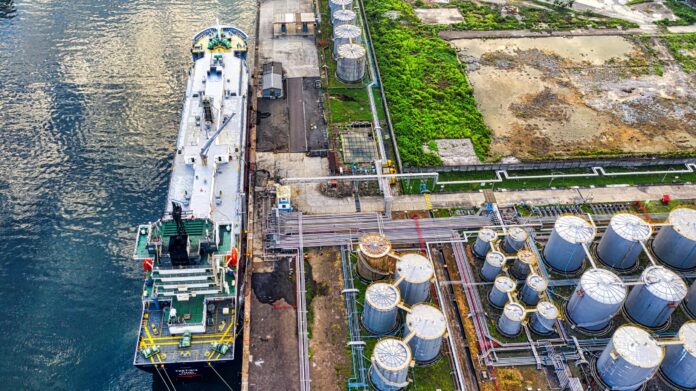
Technology, however, is only part of the answer. The decarbonization of transport, the backbone of global trade, remains a fundamental obstacle. International shipping, responsible for nearly three percent of global emissions, still relies on heavy fuel oil. Efforts to adopt green ammonia and hydrogen-based fuels are underway, but infrastructure remains minimal and costs high. Meanwhile, road freight decarbonization depends on electrification, yet long-haul trucking faces battery limitations and insufficient charging networks. Without massive infrastructure investment, supply chains will continue running on fossil fuels.
Corporate behavior is another critical factor. Many companies declare net-zero supply chain goals through Environmental, Social and Governance (ESG) policies. But greenwashing, promoting sustainability without systemic change, remains rampant. Some corporations rely on questionable carbon offsets rather than actual emissions reductions. Others shift pollution to suppliers in developing countries, exploiting weaker environmental oversight. This outsourcing of emissions exposes a moral contradiction: global corporations pledge sustainability while sustaining systems of environmental inequality.
However, there are emerging examples of meaningful transformation. Major retail and manufacturing firms are redesigning product lifecycles to reduce emissions through circular economy principles. Renewable-powered logistics hubs are becoming more common in Europe and East Asia. Electric delivery fleets are growing in major urban centers. Meanwhile, financial markets are rewarding companies that integrate sustainability into operational strategy rather than marketing.
Decarbonizing global supply chains will not be cheap, but it will be costlier to delay. Climate-related disruptions—floods, droughts, storms and wildfires, already destabilize supply flows and drive price volatility. The choice is no longer between profit or planet. Sustainability is becoming a competitive advantage, a hedge against economic instability and a driver of innovation. The future of global trade will be shaped by those who decarbonize early and effectively. Supply chains built for a low-carbon world will not only move goods, they will move prosperity.